Description
Tank Requirements
- Tank Size:
- Juveniles: Minimum 150 gallons.
- Adults: At least 300 gallons, with a minimum tank length of 6–8 feet to accommodate their size and swimming needs.
- Tank Setup:
- Open swimming space is essential, with minimal decorations.
- Add driftwood and floating plants to create a natural and subdued environment.
- Ensure a secure, tightly fitting lid as arowanas are powerful jumpers.
- Substrate: Sand or a bare-bottom tank is preferred for ease of cleaning.
- Lighting: Moderate lighting to prevent stress while highlighting their coloration.
Water Parameters
- Temperature: 75–86°F (24–30°C)
- pH: 5.5–7.0 (slightly acidic)
- Hardness: Soft to moderately soft water (2–10 dGH)
- Ammonia/Nitrite: 0 ppm; nitrates should remain below 20 ppm.
- Water Flow: Low to moderate flow, replicating calm blackwater rivers.
- Water Changes: Weekly water changes of 20–30% are crucial for maintaining pristine water quality.
Diet
Albino Arowanas are carnivorous and thrive on a varied, high-protein diet:
- Staple Foods:
- High-quality floating pellets designed for carnivorous fish.
- Live/Frozen Foods:
- Small fish, shrimp, insects, earthworms, and krill.
- Frozen foods such as silversides, bloodworms, and mysis shrimp.
- Occasional Treats:
- Mealworms, crickets, or feeder fish (ensure they are healthy and disease-free).
- Feeding Schedule: Feed once or twice daily, ensuring they consume all food within 3–5 minutes.
Behavior and Compatibility
- Temperament:
- Generally peaceful but predatory towards smaller fish.
- They exhibit a calm demeanor but require ample space to reduce stress and territorial behavior.
- Tankmates:
- Large, peaceful fish like stingrays, large catfish, or other similar-sized species.
- Avoid small fish or aggressive species that may provoke stress or conflict.
- Activity Level: Active swimmers that occupy the upper water column.
Breeding
Breeding Albino Arowanas in captivity is extremely rare due to their size and specific requirements:
- Spawning Setup:
- Requires a very large tank or pond, with stable warm and acidic water conditions.
- Provide an environment free of stressors and disturbances.
- Mouthbrooding:
- Males incubate eggs and fry in their mouths for up to 50 days.
- Fry Care:
- Once released, fry should be moved to a separate tank and fed live baby brine shrimp or finely powdered food.
Common Challenges
- Tank Size: Their large adult size and swimming habits demand significant space.
- Water Quality Sensitivity: Pristine water conditions are vital; fluctuations can lead to health issues.
- Jumping: Their strong jumping abilities require a secure lid to prevent injuries or escape.
- Albino Sensitivity: The albino variant is more sensitive to bright light and water quality changes, requiring extra care.
Interesting Facts
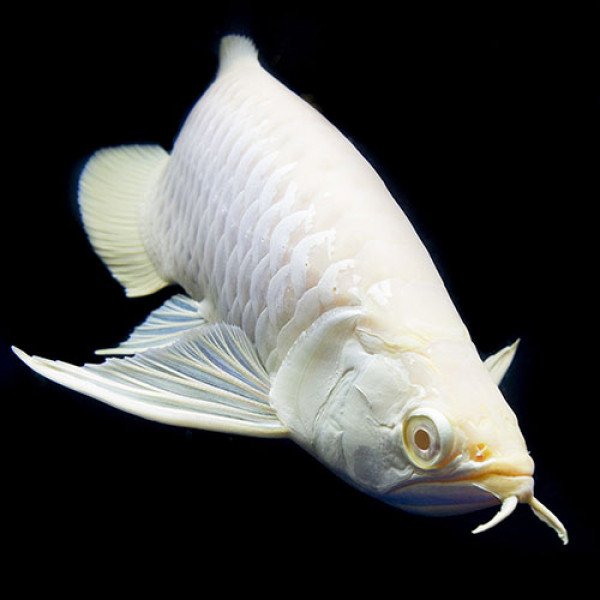
- The Albino Arowana is a genetic variation of the Brazilian Black Arowana, known for its rare and mesmerizing appearance.
- It uses its strong jumping ability to catch prey in the wild, such as insects and small animals.
- Albino Arowanas have poor eyesight compared to their non-albino counterparts, relying more on their lateral line to sense movement.
Care Summary
| Aspect |
Details |
| Tank Size |
Minimum 300 gallons for adults |
| Water Parameters |
pH 5.5–7.0, 75–86°F, soft water |
| Diet |
Carnivorous: pellets, live, and frozen foods |
| Temperament |
Peaceful but predatory towards smaller fish |
| Lifespan |
15–20 years |
The Silver Alibino Arowana is a true showpiece fish, suitable for aquarists dedicated to meeting its unique needs. Its combination of beauty, grace, and rarity makes it a treasured addition to any large, well-maintained aquarium.

Reviews
There are no reviews yet.