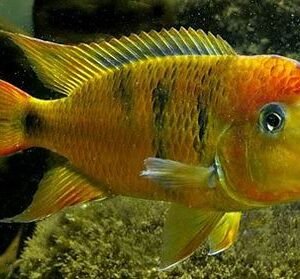
Description
Key Characteristics:
- Appearance:
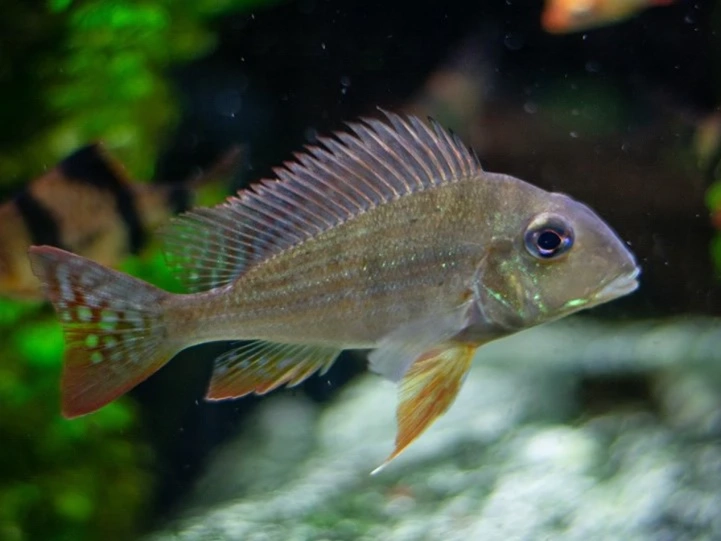
- Body: Oval and laterally compressed, with a rounded head.
- Coloration: The body often displays a mix of silvery-blue, green, and red hues. They usually have red horizontal stripes along their sides, especially prominent in mature males.
- Size: Can grow up to 25–30 cm (10–12 inches) in length, with males typically larger than females.
- Habitat:
- Native regions: Found in slow-moving rivers, lakes, and streams across the Amazon and the Guianas, particularly in areas with sandy or muddy substrates.
- Environment: Prefers soft, slightly acidic water in its natural habitat.
Behavior:
- Feeding habits: Known as “eartheaters” because they scoop up substrate, sift through it to find food particles (such as detritus, small invertebrates, and plant matter), and then expel the rest.
- Temperament: Peaceful for a cichlid, though they may engage in mild territorial behavior, especially during breeding. They are generally good tank mates for similarly sized, peaceful fish.
Aquarium Care:
- Tank size: Requires a large aquarium (ideally 55 gallons or more) due to their size and active nature.
- Water conditions: Prefers slightly acidic to neutral pH (6.0–7.5), and soft to moderately hard water (dGH 5-15). Water temperature should be maintained between 24–28°C (75–82°F).
- Substrate: A sandy substrate is crucial, as they engage in constant sifting. Fine gravel or coarse substrates can damage their delicate mouths.
- Diet: Omnivorous; their diet in captivity can include a mix of high-quality pellets, frozen foods (such as bloodworms, brine shrimp), and occasional vegetables.
Breeding:
- Reproduction: Geophagus surinamensis is a mouthbrooder, meaning after the eggs are laid, one or both parents collect the eggs in their mouths to protect them until they hatch. Breeding behavior involves the male and female forming a pair bond, clearing a spot in the substrate to lay their eggs.


Reviews
There are no reviews yet.